
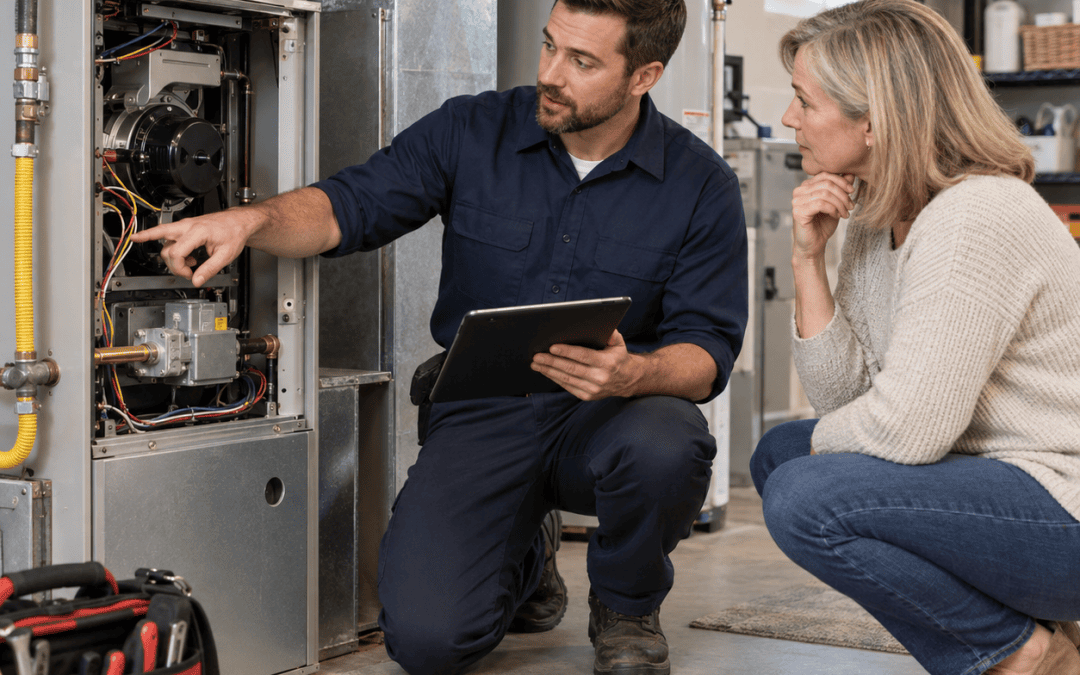
Quick Answer: Repair may make sense when the problem is limited, the furnace has been dependable, and the rest of the system is in good condition. Replacement deserves consideration when repairs are becoming frequent or expensive, the system has a serious safety problem, or it no longer provides reliable heat. An HVAC professional should inspect the complete system before recommending either option.
Consider the Furnace’s Condition and History
An older furnace does not automatically need replacement. Installation quality, maintenance, airflow, usage, and previous repairs all affect its condition. Check the equipment label or service records if you do not know its age, then consider how often it has needed service and whether repair costs are increasing.
A limited repair may provide good value when the rest of the system is sound. Replacement may be more practical when breakdowns keep happening, several parts show wear, or another costly repair would leave you with an unreliable furnace.
Take Safety and Comfort Problems Seriously
Problems involving combustion, gas connections, electrical parts, venting, or the heat exchanger require professional attention. Do not operate a furnace that a qualified technician has found unsafe. If a carbon monoxide alarm sounds, leave the home and follow the alarm manufacturer’s emergency instructions.
Cold rooms, weak airflow, long heating cycles, and frequent starts and stops can also signal trouble. These problems may come from the furnace, but they can also involve a dirty filter, thermostat, ductwork, air leaks, insulation, or equipment sizing. The cause should be identified before replacement because a new furnace will not correct every comfort problem.
Look at Heating Costs in Context
Higher heating bills do not prove that the furnace is failing. Weather, utility rates, thermostat settings, air leaks, and household routines can all affect energy use. Compare similar billing periods and consider what has changed in the home.
Have the furnace inspected if it runs much longer than before or struggles to reach the selected temperature. A new system may operate more efficiently, but actual savings depend on the equipment, property, weather, and how the system is used.
Repair or Replace: What Should You Compare?
| Question | Repair may make sense when | Replacement may make sense when |
|---|---|---|
| What failed? | The problem is limited and repairable | A major or safety-related part failed |
| Has it been dependable? | Breakdowns are rare | Repairs are becoming frequent |
| Does it heat properly? | Comfort remains consistent | The furnace struggles or heats unevenly |
| What else is worn? | The rest of the system is in good condition | Several parts show significant wear |
| What will it cost? | The repair offers reasonable value | The repair is costly compared with replacement |
| How urgent is it? | The home still has dependable heat | The furnace is unsafe or cannot provide heat |
Ask the technician to explain what failed, what condition the rest of the furnace is in, and what each option will cost. The recommendation should be based on the complete system rather than one symptom.
What Should You Plan Before Replacement?
A new furnace should fit the property instead of simply matching the old unit. The contractor should consider the building’s size, layout, insulation, windows, ductwork, fuel source, electrical needs, and heating demands.
Compare efficiency, warranties, controls, installation requirements, and the total written price. Ask whether ductwork, venting, drainage, gas piping, or electrical changes are included. If financing is available, review the terms and total cost before deciding.
Is It Better to Plan Before the Furnace Fails?
Planning while the furnace is still safe and working gives you more time to compare equipment, warranties, prices, and installation schedules. Waiting for a complete breakdown during cold weather may limit your choices.
Urgent replacement may be necessary when the furnace is unsafe or cannot provide heat. Otherwise, use the inspection results, repair history, and budget to choose the timing.
Frequently Asked Questions
Does an Old Furnace Always Need to Be Replaced?
No. An older furnace may remain usable if it operates safely, heats properly, and has not needed frequent repairs.
Is One Expensive Repair Enough to Justify Replacement?
Not always. Consider the repair cost, the condition of the remaining system, previous breakdowns, and the likelihood of more repairs.
Will a New Furnace Fix Uneven Temperatures?
Not necessarily. Uneven heating may involve ductwork, airflow, insulation, air leaks, thermostat problems, or equipment sizing.
Can Replacing a Furnace Lower Heating Costs?
A properly selected furnace may operate more efficiently than a worn or poorly sized system. Actual savings depend on the property, weather, utility rates, and system use.
How Long Does Furnace Replacement Take?
The schedule depends on the equipment and whether ductwork, venting, gas, drainage, or electrical changes are required. Ask the contractor what the project includes.
Get Help Comparing Your Furnace Options
County Wide Heating & Cooling can inspect your furnace, explain its condition, and help you compare repair and replacement. We serve homes and businesses in Muncie and nearby Delaware County communities.
Contact County Wide Heating & Cooling today to schedule a furnace evaluation.