
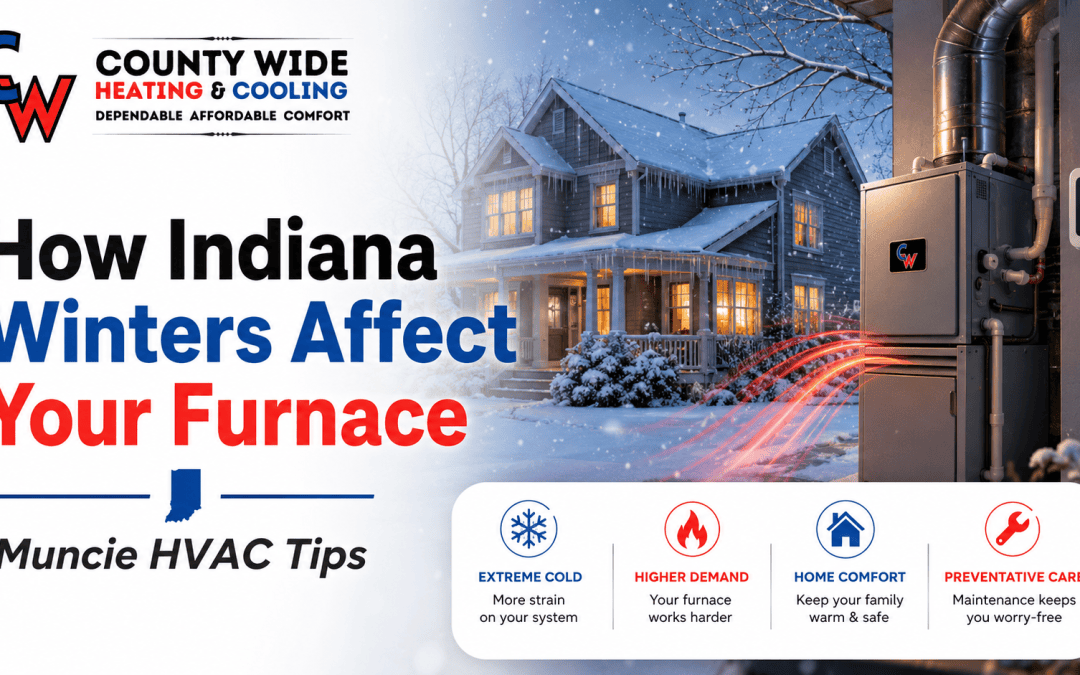
Quick Answer: Cold Indiana winters can put extra stress on your furnace because the system has to run longer and more often to keep your home warm. This added workload can reveal hidden issues such as dirty filters, weak ignitors, restricted airflow, blower motor wear, thermostat problems, or flame sensor trouble. Homeowners in Muncie and East Central Indiana should watch for uneven heating, unusual noises, short cycling, weak airflow, rising energy bills, or a furnace that struggles to keep up during cold snaps.
Why Cold Weather Is Hard on Your Furnace
During mild weather, your furnace may only run a few times per hour. During freezing weather, it may run longer cycles and turn on more often to keep your home comfortable. That puts more demand on the ignitor, flame sensor, blower motor, heat exchanger, thermostat, blower motor, and airflow system.
This is especially noticeable in older Muncie-area homes, homes with aging ductwork, rural properties, or houses with uneven insulation. When cold weather lasts for several days, the furnace has less time to rest between cycles. Any weak part, airflow restriction, or maintenance issue can become more obvious.
At County Wide Heating & Cooling, common winter furnace service calls in Muncie and East Central Indiana often involve clogged air filters, failed ignitors, dirty flame sensors, thermostat problems, blower issues, and furnaces blowing cool air. Many of these problems show up during the first major cold stretch because the system is suddenly working harder than it has in months.
If your system is already showing signs of trouble, scheduling professional furnace repair can help address the issue before it turns into a full winter breakdown.
Warning Signs Your Furnace May Be Struggling
Most furnace problems give warning signs before the system stops working completely. Homeowners should watch for:
- Uneven heating or cold spots in the home
- Weak airflow from vents
- Strange noises during startup or operation
- Short cycling, where the furnace turns on and off too often
- Longer run times than usual
- Air that does not feel warm enough
- Unusual burning, electrical, or musty smells
- Higher energy bills without a clear reason
- A furnace that struggles to keep up during freezing weather
One small sign does not always mean your furnace is about to fail. But if the same problem keeps happening, or if several symptoms appear at once, it is smart to have the system checked.
Furnace noises should also be taken seriously. Banging may come from expanding ductwork, delayed ignition, dirty burners, or airflow problems. Squealing may point to a blower motor or belt issue. Rattling can mean something is loose. Grinding or scraping noises should be inspected quickly because they may point to a more serious mechanical issue.
Dirty Filters Are a Common Winter Problem
A dirty air filter is one of the most common causes of winter furnace trouble. When dust, pet hair, and debris clog the filter, airflow becomes restricted and the furnace has to work harder.
Poor airflow can cause longer heating cycles, overheating, short cycling, extra blower motor wear, more dust in the home, and less consistent comfort.
During heavy heating season, homeowners should check the furnace filter every 30 days, especially in homes with pets, allergies, children, or higher dust levels. Always use the correct filter type, since a filter that is too restrictive can also affect airflow.
Regular furnace maintenance can help catch airflow issues, dirty components, and other winter heating problems before they get worse.
Why Your Furnace May Blow Cold Air
A short burst of cooler air can be normal when a heating cycle first starts. The blower may move air before the heat exchanger is fully warm. But if your furnace keeps blowing cold air, there may be a problem. Possible causes include a dirty flame sensor, ignition problem, clogged air filter, incorrect thermostat setting, overheating system, limit switch issue, gas supply concern, or restricted airflow.
If the air from your vents stays cold, the system may be trying to run but failing to complete the heating cycle correctly. That is a good reason to schedule heating service.
Furnace Age, Repair, and Replacement
Many gas furnaces last around 15 to 20 years with proper maintenance, but actual lifespan depends on installation quality, maintenance history, usage, airflow, and overall system condition.
If your furnace is more than 15 years old, pay closer attention to warning signs such as frequent repairs, uneven heating, rising energy bills, loud operation, weak airflow, short cycling, rust or visible wear, or trouble keeping up during cold weather.
Not every furnace problem means you need a new system. Issues like a clogged filter, dirty flame sensor, faulty ignitor, thermostat problem, or blower component issue may be repairable.
Replacement may be worth discussing if the furnace is older, breaks down often, struggles every winter, or has a major safety or heat exchanger concern. A professional inspection can help you understand whether furnace repair or replacement makes more sense for your home.
Carbon Monoxide Safety During Furnace Season
Gas furnaces should be inspected regularly for safety. A properly working furnace vents combustion gases outside your home, but problems with the heat exchanger, venting, or combustion process can create a carbon monoxide risk.
Carbon monoxide is dangerous because it has no color or smell. Every home with a gas furnace should have working carbon monoxide detectors.
Watch for possible combustion or venting concerns such as:
- A yellow or flickering burner flame
- Soot around the furnace
- Strange odors near the heating system
- Frequent system shutdowns
- Excess moisture near windows
- Carbon monoxide alarm alerts
If your carbon monoxide alarm sounds, leave the home immediately and call 911 or the appropriate emergency authority. Do not stay inside to troubleshoot the furnace.
What Homeowners Can Check First
Before calling for service, homeowners can safely check a few basics. Make sure the thermostat is set to heat, replace the thermostat batteries if needed, check the furnace filter, confirm vents are open and not blocked, make sure the furnace switch is on, and check whether the breaker has tripped.
Do not open gas components, adjust burners, bypass safety switches, or attempt electrical repairs yourself. Furnaces include gas connections, electrical parts, burners, safety controls, and venting systems that should be handled by trained HVAC professionals.
A furnace tune-up can also help prepare your heating system for cold weather. During maintenance, an HVAC technician can inspect key components, clean parts, check airflow, test safety controls, review the ignition system, and make sure the furnace is operating properly.
When to Call for Furnace Repair
Call for furnace repair if your system is not heating properly, keeps shutting off, makes strange noises, gives off unusual smells, blows cold air, or struggles to keep your home comfortable.
Call right away if you have no heat during freezing weather, notice burning or electrical odors, hear grinding or scraping noises, see repeated short cycling, notice possible combustion or venting concerns such as a yellow burner flame or soot near the furnace, or if a carbon monoxide alarm sounds.
Prompt service can help restore comfort and reduce the risk of a more serious heating problem during winter. If your home has no heat or an urgent heating issue, contact County Wide Heating & Cooling for emergency HVAC service in Muncie and East Central Indiana.
Frequently Asked Questions
Can extreme cold cause a furnace to stop working?
Extreme cold does not usually cause a healthy furnace to fail by itself, but it can expose weak parts. Dirty filters, failing ignitors, flame sensor problems, blower motor issues, and airflow restrictions often show up during cold snaps because the furnace is running longer and more often.
How often should I check my furnace filter during winter?
During heavy heating season, check your furnace filter every 30 days. Some homes may need filter changes more often, especially homes with pets, allergies, children, or higher dust levels.
Why is my furnace blowing cold air?
Your furnace may blow cold air because of a dirty flame sensor, ignition issue, clogged filter, thermostat setting problem, overheating system, limit switch issue, gas supply concern, or restricted airflow. A brief burst of cool air at startup may be normal, but steady cold air from the vents should be inspected.
Should I schedule furnace maintenance if my system seems to be working?
Yes. Furnace maintenance can help catch small issues before they become bigger winter problems. Even if your system is heating now, a tune-up can help check airflow, ignition, safety controls, blower operation, and other key components before the furnace has to work harder during colder weather.
Should I repair or replace an older furnace?
It depends on the furnace’s age, repair cost, safety, comfort, efficiency, and repair history. If your furnace is older than 15 years and needs frequent repairs, replacement may be worth discussing. If the problem is minor, repair may still be the better option.
Schedule Furnace Service in Muncie and East Central Indiana
Cold Indiana winters can put serious demand on your heating system. If your furnace is making strange noises, blowing cold air, cycling too often, or struggling to keep your home warm, it may be time to have it inspected.
County Wide Heating & Cooling helps homeowners throughout Muncie and East Central Indiana with furnace repair, furnace maintenance, heating system inspections, and emergency HVAC service.
Contact County Wide Heating & Cooling today to schedule professional furnace service and keep your home warm, safe, and comfortable this winter.