
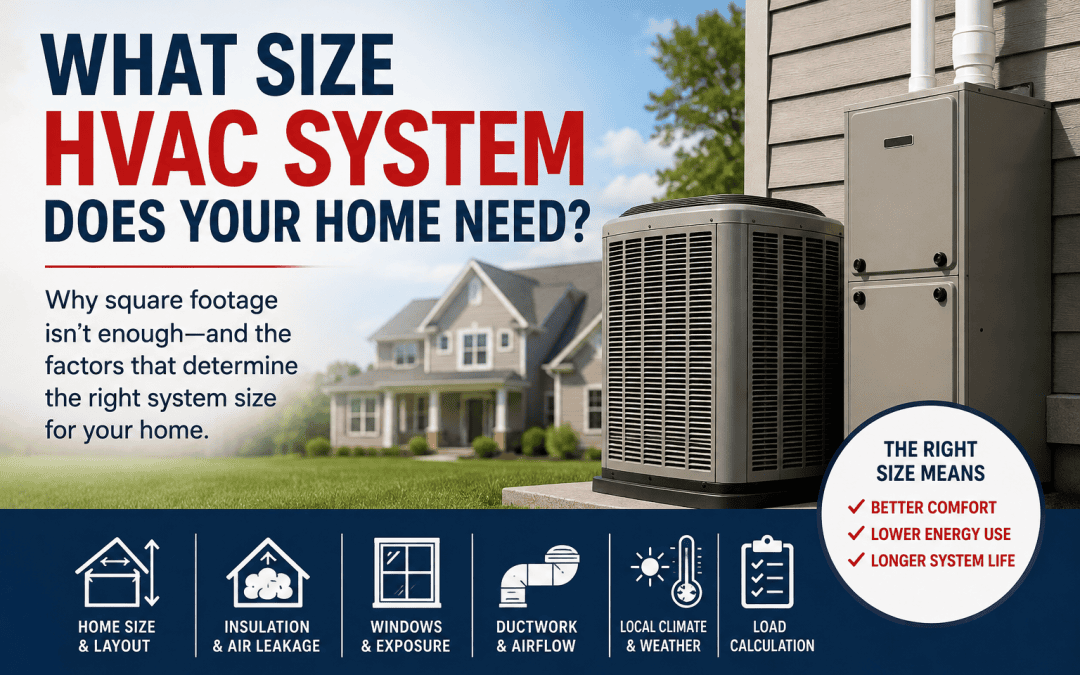
The right HVAC system size depends on more than square footage. Two 2,000-square-foot homes can need different heating and cooling capacity because of insulation, windows, ceiling height, air leakage, ductwork, sun exposure, and other building characteristics. For homeowners in Muncie and surrounding Delaware County communities, County Wide Heating & Cooling considers these factors when evaluating system needs so equipment can be matched more closely to the home.
That is why HVAC equipment should be selected based on how the home actually gains and loses heat, not just on a simple square-foot estimate.
Why Isn’t Square Footage Enough?
Square footage is only one part of the sizing process. A well-insulated home with newer windows may hold conditioned air much better than an older home of the same size with air leaks, high ceilings, or large areas of glass.
Home layout also matters. A single-story home, two-story home, and house with vaulted ceilings can place different demands on an HVAC system even when their total floor area is similar. Choosing equipment based only on square footage can result in a system that is larger or smaller than the home actually needs.
What Factors Affect HVAC System Size?
A proper sizing evaluation looks at the house as a complete system. Important factors include the home’s size and layout, insulation, window type and placement, ceiling height, air leakage, sun exposure, ductwork, and changes made to the property over time.
New windows, added insulation, air sealing, finished living space, or a home addition can change the amount of heating and cooling the house requires. This is one reason replacing old equipment with the exact same capacity is not always the best approach.
What Is an HVAC Load Calculation?
An HVAC load calculation estimates how much heating and cooling a specific home requires. Rather than relying on a general square-footage rule, it considers the actual characteristics of the building.
HVAC professionals commonly use methods such as Manual J, a residential load-calculation method used to estimate the amount of heating and cooling a home requires based on its construction, insulation, windows, air leakage, orientation, and local design conditions. The goal is to match the system’s capacity as closely as practical to the home’s actual demand.
What Happens if the System Is Too Large or Too Small?
A bigger system is not automatically better. Oversized equipment can reach the thermostat setting quickly and shut off before completing a longer operating cycle. This short cycling can contribute to uneven temperatures, weaker humidity control, and more frequent starts and stops.
An undersized system has the opposite problem. It may run for long periods and still struggle to maintain the thermostat setting during very hot or cold weather.
| System Size | What You May Notice |
|---|---|
| Oversized | Short cycling, uneven temperatures, frequent starts and stops, weaker humidity control |
| Undersized | Long run times, difficulty reaching the thermostat setting, reduced comfort during extreme weather |
| Properly sized | More consistent operation and capacity better matched to the home |
These symptoms can also come from airflow, ductwork, maintenance, or equipment problems, so system size should not be judged from one sign alone.
How Do Ductwork and Home Improvements Affect Sizing?
The equipment and duct system need to work together. Even a correctly sized furnace or air conditioner may not perform as expected if the ductwork is leaking, restricted, poorly designed, or unable to move enough air through the home.
Major home improvements can also change the load. Added insulation, replacement windows, air sealing, renovations, and finished living areas can all affect how much heating and cooling the property needs. If the home has changed significantly since the existing system was installed, sizing should be reevaluated before new equipment is selected.
How Does Central Indiana Weather Affect HVAC Sizing?
Homes in Muncie and East Central Indiana need equipment that can handle both summer cooling and winter heating demands. Cooling systems have to manage warm, humid weather, while heating equipment must perform during colder conditions.
That makes local climate part of the sizing decision. A system should be selected to handle expected seasonal demand without being unnecessarily oversized during milder weather. Homeowners comparing a heat pump and furnace should consider both the type of equipment and the actual heating load of the home.
What Should You Ask Before Choosing a New HVAC System?
Before selecting replacement equipment, ask how the recommended size was determined. The answer should involve more than the square footage of the home or the capacity of the old unit.
It is also reasonable to ask whether the existing ductwork can support the proposed system, whether recent home improvements affect the load, and whether long-standing comfort problems could be related to sizing or airflow. When older cooling equipment is already showing signs that an air conditioner may need replacement, replacement is also a good time to reassess whether the old system was correctly sized.
Correct system sizing should be part of the discussion whenever heating and cooling services involve replacing major equipment, changing system type, or addressing ongoing comfort problems.
Frequently Asked Questions About HVAC System Sizing
How do I know what size HVAC system my house needs?
The correct HVAC size depends on the home’s heating and cooling load rather than square footage alone. Insulation, windows, air leakage, ceiling height, layout, ductwork, and local weather conditions can all affect the amount of capacity a home needs.
Is a bigger HVAC system better?
Not necessarily. Oversized systems can cycle on and off too frequently, which may affect comfort, humidity control, and equipment operation. The better choice is equipment matched closely to the home’s actual heating and cooling demand.
Can home improvements change the HVAC size I need?
Yes. New insulation, replacement windows, air sealing, additions, and finished living areas can change how much heating and cooling the home requires. Significant improvements are a good reason to recalculate the load before replacing equipment.
Does ductwork need to be checked when replacing an HVAC system?
Yes. Ductwork affects how conditioned air moves throughout the home. Leaks, restrictions, or improperly sized ducts can limit the performance of new equipment even when the furnace or air conditioner itself is correctly sized.
About County Wide Heating & Cooling: County Wide Heating & Cooling is a Muncie-based HVAC company serving residential and commercial customers throughout Muncie and nearby Delaware County communities. The company provides heating and cooling repair, installation, replacement, and maintenance services.