
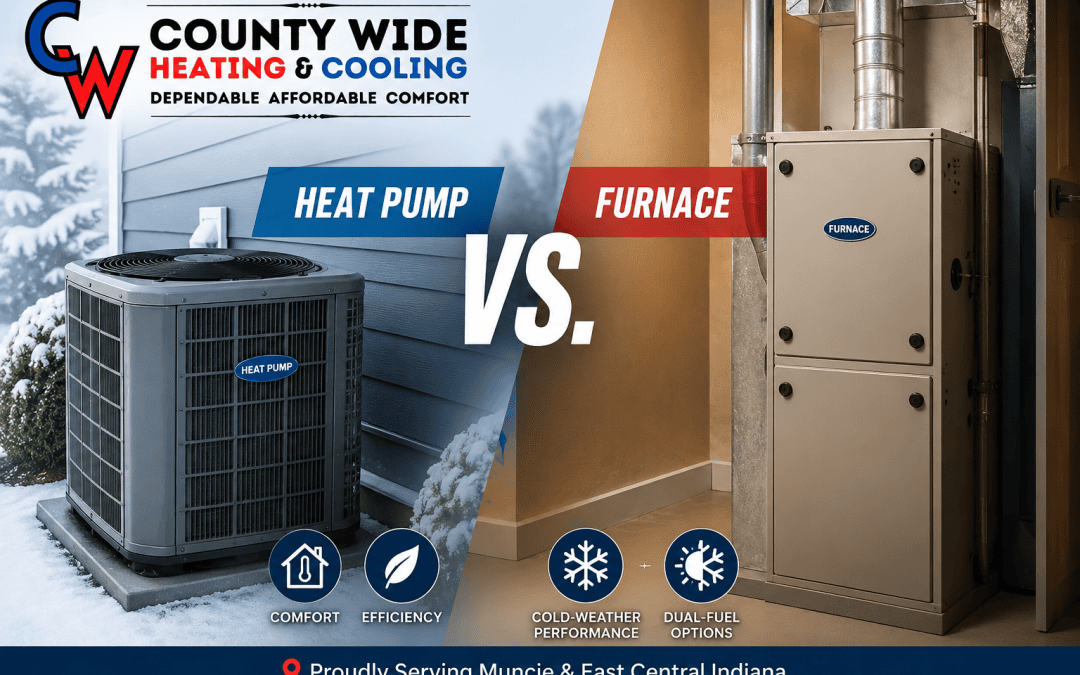
Quick Answer: A gas furnace is often the better choice for the coldest Indiana winter days because it delivers stronger heat in freezing temperatures. A heat pump can be a smart option for year-round efficiency, especially in well-insulated homes or when replacing both heating and cooling systems. For many homeowners, a dual-fuel system offers the best balance by using a heat pump in milder weather and a gas furnace when it gets colder.
Heat Pump vs. Furnace: Quick Comparison
|
Feature |
Furnace |
Heat Pump |
|
Best for cold winter weather |
Stronger heating performance |
May need backup heat during colder stretches |
|
Heating feel |
Warmer air from vents |
Milder, steadier air |
|
Cooling included |
No |
Yes |
|
Efficiency in mild weather |
Good |
Excellent |
|
Common in Indiana |
Very common |
Growing option |
|
Works with existing gas service |
Yes |
Sometimes paired with gas backup |
|
Best fit |
Strong winter heat |
Year-round efficiency |
How a Furnace Works
A furnace creates heat and sends warm air through your home’s ductwork. Most furnaces in East Central Indiana run on natural gas, though some homes use propane, electric, or oil systems.
When your thermostat calls for heat, the furnace turns on, heats the air, and pushes warm air through your vents. For many Indiana homeowners, a furnace feels familiar because it delivers strong, warm air quickly.
Why Furnaces Are Common in East Central Indiana
Gas furnaces are common in Muncie and surrounding communities because local winters often bring below-freezing weather and long stretches of heating demand.
A furnace may be a strong fit for older homes, homes with existing gas service, drafty homes, families who prefer warmer air from the vents, or homeowners who want dependable heat during cold snaps.
How a Heat Pump Works
A heat pump works differently than a furnace. Instead of creating heat, it moves heat from one place to another.
In the winter, a heat pump pulls heat from the outdoor air and moves it inside. In the summer, it reverses the process and works like an air conditioner. That means a heat pump can handle both heating and cooling.
When a Heat Pump Makes Sense
A heat pump may be a good option if you are replacing both your air conditioner and heating system, want one system for heating and cooling, value energy efficiency, have a well-insulated home, prefer steady temperatures, or are interested in newer HVAC technology.
Heat pumps can work well in Indiana, especially during milder fall, winter, and spring weather. Proper sizing and installation are important for comfort and performance.
Which System Handles Indiana Winters Better?
For the coldest days of the year, a furnace usually has the advantage. A gas furnace creates its own heat, so it can keep producing strong warm air when outdoor temperatures drop.
A heat pump can still heat your home in cold weather, but it may work harder as temperatures fall. During very cold weather, some heat pumps need backup heat to help maintain comfort.
That does not make heat pumps a bad choice for Indiana. It means the system needs to match the home, climate, and homeowner’s expectations.
What About a Dual-Fuel System?
A dual-fuel system combines a heat pump with a gas furnace. The heat pump handles heating during milder weather when it can run efficiently. When temperatures drop, the gas furnace takes over.
This setup can give homeowners efficient heating during milder weather, strong furnace heat during colder Indiana temperatures, cooling from the heat pump in summer, and better comfort control throughout the year.
For many homes in Muncie and the surrounding area, a dual-fuel system is worth discussing during an HVAC replacement consultation.
Best Choice by Home Situation
A gas furnace may be the best fit if your home already has natural gas service, you want strong heat during cold snaps, or your home is older and loses heat quickly.
A heat pump may be the best fit if your home is well insulated, you want one system for heating and cooling, or you are replacing both your AC and heating system.
A dual-fuel system may be the best fit if you want heat pump efficiency during mild weather and gas furnace strength during colder Indiana winter days.
Heat Pump vs. Furnace Cost Considerations
Most homeowners want to know which option makes the most financial sense. The answer depends on the home, equipment, installation needs, utility rates, insulation, system efficiency, and how the system will be used.
If your home already has natural gas service and existing ductwork, a furnace may be a straightforward option. If you are replacing both your air conditioner and heating system, a heat pump may be worth considering because it can handle both heating and cooling.
A dual-fuel system may involve a larger setup because it uses both a heat pump and furnace, but it can offer strong comfort and efficiency benefits.
Furnace Heating Feels Different Than Heat Pump Heating
One thing homeowners often notice is how the heat feels. A furnace usually produces hotter air from the vents, which can feel comforting during cold Indiana mornings.
A heat pump usually produces milder air. It may not feel as hot at the vent, but it can still warm the home effectively. Heat pumps often run longer and provide steadier temperatures.
Neither feeling is wrong. It comes down to what you prefer.
Don’t Choose Based on Equipment Alone
The right heating system depends on more than furnace vs. heat pump. A professional HVAC contractor should also look at your home size, insulation, ductwork condition, existing gas or electric setup, current equipment, comfort concerns, and indoor air quality needs.
Proper sizing and installation matter just as much as the type of equipment. A system that is too large may short-cycle and wear out faster. A system that is too small may struggle to keep your home comfortable.
This is especially important in older Muncie-area homes, rural East Central Indiana homes, and homes with aging ductwork or uneven insulation.
Local HVAC Help in Muncie and East Central Indiana
County Wide Heating & Cooling helps homeowners throughout Muncie and East Central Indiana choose heating and cooling systems that make sense for their homes.
Our team can inspect your current system, explain your options, and help you compare a furnace, heat pump, or dual-fuel setup without pressure or confusion.
Frequently Asked Questions
Is a heat pump or furnace better for Indiana?
For the coldest Indiana winter days, a gas furnace usually provides stronger heating performance. A heat pump can still be a good option for homeowners who want year-round efficiency and one system for heating and cooling.
Is a dual-fuel system good for Indiana?
Yes, a dual-fuel system can be a strong choice for Indiana homes. The heat pump can run during milder weather, and the gas furnace can take over when temperatures get colder.
Is a heat pump cheaper to run than a furnace?
Sometimes. A heat pump can be very efficient during mild weather because it moves heat instead of creating it. However, operating costs depend on utility rates, system efficiency, outdoor temperatures, and the condition of the home.
Can a heat pump keep up during an Indiana winter?
A properly sized modern heat pump can handle much of Indiana’s heating season. During very cold weather, backup heat may be needed to maintain comfort.
How do I know which system is right for my home?
The best way to know is to schedule a professional HVAC evaluation. A technician can look at your home, current system, ductwork, insulation, utility setup, and comfort needs before recommending the best option.
Schedule a Heating System Evaluation
If you are comparing a heat pump vs. furnace for your East Central Indiana home, County Wide Heating & Cooling can help.
We serve homeowners in Muncie and surrounding communities with honest guidance, dependable service, and heating solutions built for Indiana weather.
Contact County Wide Heating & Cooling today to schedule a heating system evaluation.