
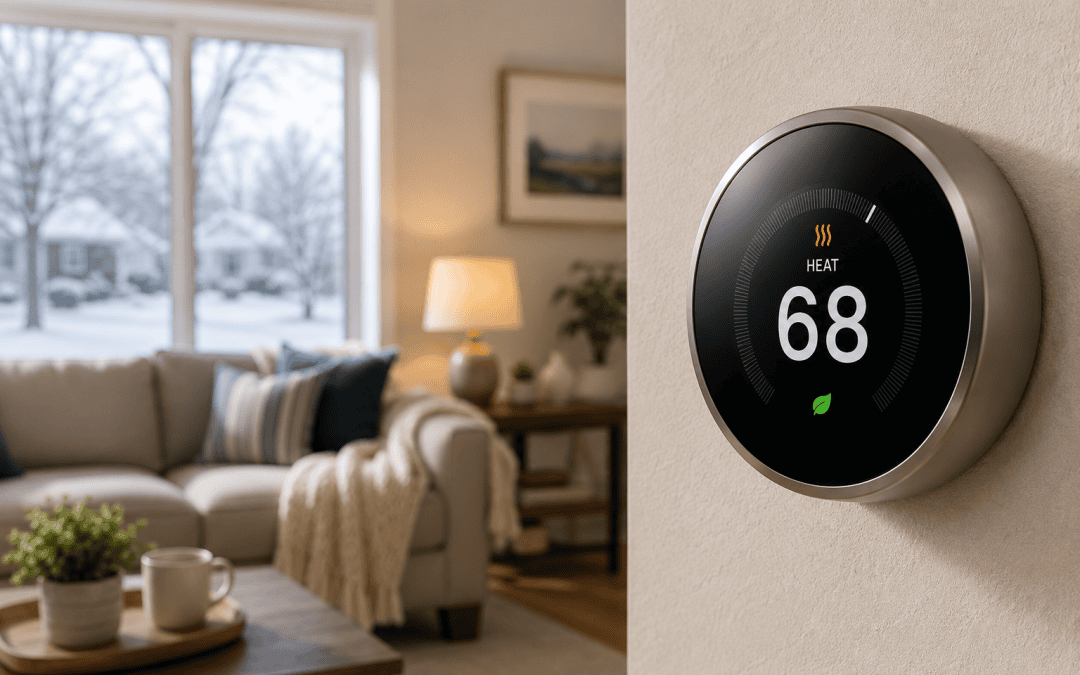
Quick Answer: The best thermostat setting is the most energy-efficient temperature that keeps your household safe and comfortable. Many Muncie homeowners start around 76–78°F in summer and 68–70°F in winter, then make small adjustments based on humidity, insulation, home layout, and HVAC performance.
Key Takeaways
- Use seasonal temperature ranges as starting points, not strict rules.
- Make small adjustments instead of changing the thermostat dramatically.
- Use a consistent schedule when sleeping or away from home.
- Check airflow, humidity, and HVAC performance when the temperature feels wrong.
What Is the Best Thermostat Setting?
There is no single thermostat temperature that works for every home. The right setting depends on personal comfort, health needs, indoor humidity, insulation, sunlight, window condition, and the type of heating and cooling system you have.
For many households, the following settings provide a reasonable place to start:
|
Season |
When Home |
When Sleeping or Away |
|
Summer |
76–78°F, if comfortable |
A few degrees warmer |
|
Winter |
68–70°F, if comfortable |
A few degrees cooler |
These ranges should be adjusted as needed. Households with infants, older adults, pets, or people with medical conditions may need different temperatures. During extreme heat or cold, safety should take priority over reducing energy use.
The most efficient temperature is generally the one that requires the least heating or cooling while keeping everyone comfortable. That does not mean you should tolerate unsafe or unpleasant indoor conditions to save energy.
Make Small, Consistent Adjustments
Constantly changing the thermostat can make the home feel less comfortable and may cause the HVAC system to operate longer than necessary. Choose a reasonable setting, allow the system time to respond, and adjust it gradually.
Setting the air conditioner much lower than your desired temperature will not normally cool the home faster. Most residential air conditioners operate at their usual cooling rate until the selected temperature is reached. A setting of 65°F may simply cause the system to run longer.
The same is true for heating. Raising the thermostat to 80°F does not usually make a furnace warm the house faster. Set it to the temperature you actually want and give the system time to work.
Heat-pump owners should be especially careful with large winter temperature changes. Depending on the system, a major increase may activate supplemental heat. Gradual adjustments and equipment-specific thermostat settings are often more appropriate.
Use a Schedule That Matches Your Routine
Programmable and smart thermostats can help reduce unnecessary heating and cooling by changing temperatures automatically. A useful schedule keeps the home comfortable when people are present and adjusts the temperature slightly when the house is empty or everyone is sleeping.
Large setbacks are not always necessary. A change of a few degrees is often easier for the system to recover from and may provide a better balance between comfort and efficiency.
Smart thermostats may also provide remote access, maintenance reminders, equipment alerts, and energy-use information. However, installing a smart thermostat does not guarantee lower energy bills. Its value depends on how the schedule is programmed, how often it is overridden, and whether the HVAC system is operating correctly.
Before replacing a thermostat, confirm that the new model is compatible with your system. Heat pumps, multi-stage equipment, zoned systems, and HVAC accessories may require specific controls or wiring.
Manage Summer Comfort and Humidity
Muncie summers can be hot and humid. High indoor humidity can make a room feel warmer even when the thermostat displays a reasonable temperature.
Before lowering the thermostat, consider whether sunlight or poor air circulation is affecting comfort. Closing blinds during the hottest part of the day and using ceiling fans in occupied rooms can help people feel cooler. Turn fans off when rooms are empty because fans move air around people but do not lower the actual room temperature.
Keep supply vents and return grilles open and clear of furniture, curtains, and rugs. Closing several vents may restrict airflow and contribute to uneven temperatures.
If the home feels sticky while the air conditioner is running, the issue may involve airflow, maintenance, drainage, equipment sizing, or another humidity concern. Lowering the thermostat repeatedly may increase runtime without resolving the underlying problem.
Maintain Steady Winter Comfort
During cold Indiana weather, many homeowners are comfortable with a setting around 68–70°F. Lowering the temperature slightly while sleeping or away may reduce heating demand, but the adjustment should fit the home and heating system.
Open curtains on sunny windows during the day when the sunlight helps warm the home. Close them at night to reduce heat loss, and seal noticeable drafts around exterior doors and windows.
Low humidity can also make indoor air feel colder. If the thermostat shows a comfortable temperature but the home still feels chilly, the cause may be dry air, cold surfaces, drafts, or uneven airflow rather than the thermostat setting itself.
Check the Thermostat’s Location
A thermostat should measure conditions that reasonably represent the main living areas of the home. Poor placement can produce misleading readings and cause the HVAC system to run too much or shut off too soon.
Thermostats may be affected when placed near direct sunlight, exterior doors, kitchens, supply vents, drafty windows, or other heat sources. For example, afternoon sunlight hitting the thermostat may cause the air conditioner to continue running after other rooms are already comfortable.
Do not relocate or rewire a thermostat unless you are familiar with the equipment and wiring. An HVAC technician can determine whether the current location is affecting temperature control.
Look Beyond the Thermostat
The thermostat controls when the HVAC system operates, but it cannot correct dirty filters, blocked vents, damaged ductwork, poor insulation, or failing equipment.
Check the air filter monthly during periods of heavy heating or cooling. Replace it according to the filter manufacturer’s guidance and the needs of the household. Homes with pets, remodeling dust, allergies, or frequent system use may require more frequent changes.
Older Muncie homes may also have additions, basement ductwork, drafty windows, or uneven insulation. These conditions can cause certain rooms to feel warmer or colder even when the thermostat is accurate.
The following signs may indicate that the issue goes beyond the thermostat:
|
What You Notice |
What It May Mean |
|
Some rooms stay too hot or cold |
Airflow, ductwork, insulation, or balancing problem |
|
The system runs almost constantly |
Extreme weather, air leaks, maintenance, or equipment issue |
|
The thermostat reading feels inaccurate |
Poor placement, calibration, sunlight, or drafts |
|
The system starts and stops frequently |
Thermostat, airflow, electrical, or equipment concern |
|
The thermostat display is blank |
Battery, power, wiring, drain switch, or HVAC issue |
You can safely check the thermostat mode, schedule, batteries, filter, and visible vents. Do not handle exposed wires or remove HVAC access panels unless you are qualified. Contact an HVAC professional if you notice a burning smell, sparking, repeated power loss, or unusual system behavior.
Frequently Asked Questions
Should I turn off my HVAC system when I leave home?
For most short absences, it is better to adjust the thermostat by a few degrees rather than turn the system off completely. Maintaining some heating or cooling can help control humidity, protect plumbing during cold weather, and reduce the time needed to restore comfort.
How many degrees should I change the thermostat at night?
A modest change of a few degrees works well for many households. The ideal adjustment depends on comfort, weather, insulation, and equipment type, so avoid a setback that causes the system to struggle in the morning.
Is the temperature shown on my thermostat always accurate?
Not necessarily. Sunlight, drafts, nearby vents, poor placement, calibration problems, and normal display rounding can affect the reading. If the difference is noticeable or consistent, have the thermostat tested.
Does closing vents in unused rooms save energy?
Closing several vents may disrupt airflow and increase pressure inside the duct system. It can also create uneven temperatures and affect HVAC performance, so vents should generally remain open unless the system was designed for zoning.
When should a thermostat be replaced?
Replacement may be appropriate when the thermostat is unreliable, inaccurate, incompatible with the HVAC system, or missing scheduling features you would regularly use. Have the system checked first because wiring, airflow, and equipment problems can resemble thermostat failure.
Get Help With Thermostat and Comfort Problems
County Wide Heating & Cooling can inspect your thermostat and HVAC system, identify conditions affecting indoor comfort, and explain the available options. Contact the team to schedule thermostat or HVAC service in Muncie or elsewhere in East Central Indiana.