
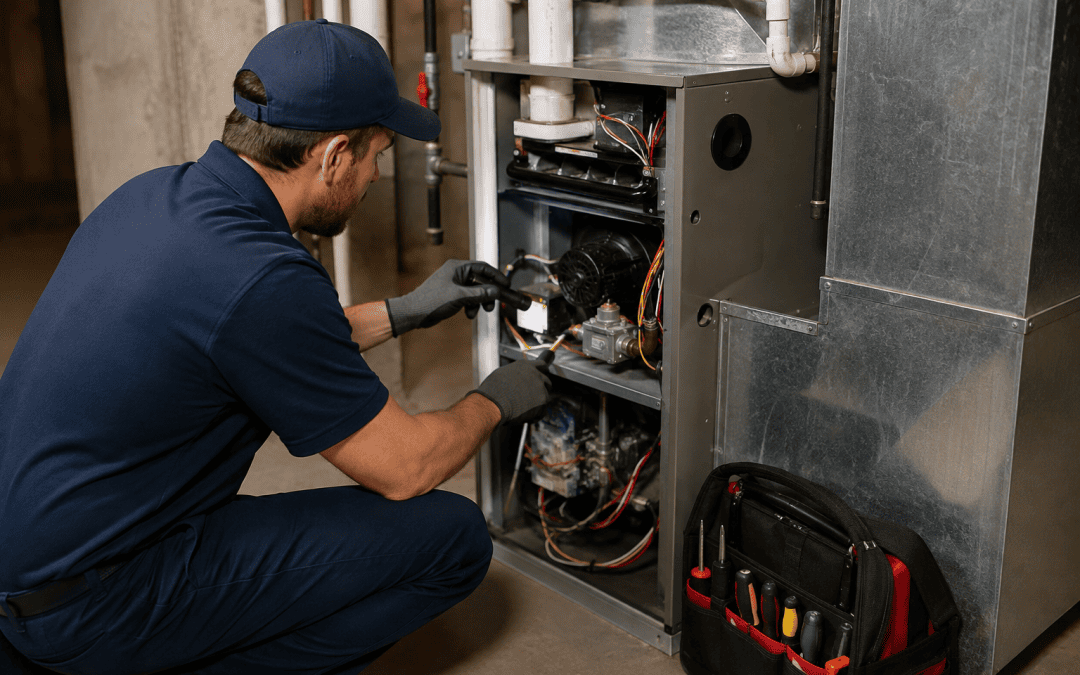
An HVAC repair visit usually follows five basic stages: discussing the symptoms, inspecting the system, testing relevant components, identifying the likely cause, and reviewing the next step. For homeowners in Muncie and surrounding Delaware County communities, understanding that process can make the visit easier and help you know what information to provide and what questions to ask.
The goal of a repair visit is not simply to replace a part. A proper diagnosis should help explain why the system is not working correctly and what options make sense based on the condition of the equipment.
What Happens When the HVAC Technician Arrives?
The visit usually starts with a short conversation about what you have noticed. The technician may ask when the problem began, whether the system is still heating or cooling, whether the issue happens all the time or only occasionally, and whether you have noticed changes in airflow, temperature, sound, or smell.
You do not need to know HVAC terminology. Simple observations such as “the furnace keeps turning on and off,” “the AC is running but the house is still warm,” or “one part of the house feels different from the rest” can give the technician useful clues.
If the system has been repaired recently or has had a recurring issue, sharing that history can also help.
What Are the Main Steps in an HVAC Repair Visit?
Although the exact process varies by system and problem, most service visits follow a similar order.
- Discuss the symptoms. The technician learns what the system has been doing and when the issue started.
- Inspect the equipment. Relevant parts are checked for visible wear, airflow restrictions, electrical concerns, drainage problems, or other operating issues.
- Test the system. Temperatures, controls, electrical components, motors, fans, airflow, or other parts may be tested depending on the symptoms.
- Identify the likely cause. The inspection and test results are used together to narrow down what is affecting the system.
- Review the next step. The technician explains what was found and whether repair, maintenance, additional testing, or replacement should be considered.
This process helps reduce guesswork and gives the homeowner a clearer explanation of what is happening.
What Does an HVAC Technician Inspect?
The inspection depends on whether the problem involves heating, cooling, airflow, controls, or another part of the system. Common areas include the thermostat, air filter, blower components, electrical connections, motors, fans, safety controls, drainage components, and the indoor or outdoor HVAC equipment.
The technician may also look for signs that one issue is affecting another part of the system. For example, weak airflow may involve the filter, blower, ductwork, or equipment performance rather than one obvious failed part.
Looking at the system as a whole can help separate the underlying cause from the symptom you first noticed.
How Is an HVAC Problem Diagnosed?
Some heating and cooling problems are easy to identify, while others require testing. A system that will not start could involve the thermostat, electrical components, safety controls, or another part of the equipment. If your air conditioner isn’t cooling properly, airflow, controls, and equipment performance may all need to be considered.
Diagnostic testing helps narrow those possibilities. Instead of replacing a part based only on a symptom, the technician can use measurements and system behavior to determine which component or condition is most likely responsible.
This is one reason it can be useful to schedule service before a system stops working completely. Changes in performance can sometimes provide useful clues before a full breakdown occurs.
What Should the Technician Explain After the Diagnosis?
Once the likely cause is found, the technician should explain what was discovered in clear terms. Homeowners should understand what is wrong, what needs attention now, and what options are available.
This is also the right time to ask whether the repair is urgent, whether another component is showing wear, and whether the condition of the system changes the recommendation.
The diagnosis should come before the recommendation. A replacement discussion should not be based on age alone.
Should You Repair or Replace an Older HVAC System?
There is no single rule that applies to every furnace or air conditioner. The better option depends on the equipment’s age, repair history, overall condition, efficiency, comfort performance, and the nature of the current problem.
A system that has been dependable and needs one repair may still have useful life remaining. A system with repeated breakdowns, poor performance, or several worn components may deserve a broader discussion. If an older cooling system has become less reliable, there may also be signs that your air conditioner may need replacement.
The important part is understanding why a repair or replacement option is being recommended and how that decision fits the condition of the system.
County Wide provides heating and cooling services for homes and businesses throughout Muncie and nearby Delaware County communities.
What Should You Do Before the Technician Arrives?
A little preparation can make the service visit easier. Make sure the thermostat, furnace or air handler, and outdoor equipment are accessible. If storage, furniture, or other items block the equipment, clear enough space for the technician to work safely.
It also helps to think about when the issue occurs. Does it happen at a certain time of day? Are some rooms more uncomfortable than others? Has the system become louder or started running longer than usual?
If you know approximately when the equipment was installed or when it was last serviced, that information can also be useful. There is no need to remove panels or attempt electrical work before the appointment.
Why Is It Better to Address HVAC Problems Early?
Many heating and cooling problems begin as changes in performance rather than a complete shutdown. Weak airflow, unusual sounds, uneven temperatures, frequent cycling, or longer run times may indicate that something is no longer operating as expected.
Having those changes checked sooner can make it easier to identify the cause before the system becomes completely inoperable. It can also give you more time to consider repair or replacement options instead of making a rushed decision during extremely hot or cold weather.
That matters in Central Indiana, where both heating and cooling equipment may see heavy seasonal use. During colder weather, homeowners may notice performance changes as cold Indiana winters affect your furnace.
What Questions Should You Ask During the Visit?
The most useful questions are usually straightforward: What did you find? What caused the problem? What needs attention now? Is anything else showing signs of wear? What happens if the repair is delayed?
If replacement is mentioned, ask why. Understanding how the system’s age, condition, repair history, and performance affect the recommendation can help you make a more informed decision.
A good service visit should leave you with a clearer understanding of the system than you had before the technician arrived.
What Should You Expect After the Service Visit?
By the end of the visit, you should have a better understanding of what is wrong with the system, what was inspected or tested, and what next step has been recommended.
Keep any service records, invoices, or notes you receive. A documented repair and maintenance history can be useful during future visits, especially as the equipment gets older.
Routine HVAC maintenance can also help identify worn components, airflow problems, and other developing concerns before they become more serious.
About County Wide Heating & Cooling: County Wide Heating & Cooling is a Muncie-based HVAC company serving residential and commercial customers throughout Muncie and nearby Delaware County communities. The company provides heating and cooling repair, installation, replacement, and maintenance services.
Frequently Asked Questions About HVAC Repair Visits
How long does an HVAC repair visit take?
The length of an HVAC repair visit depends on the problem and how much testing is needed. A straightforward issue may be identified quickly, while intermittent problems or multiple symptoms may require more diagnostic time.
Can an HVAC problem usually be diagnosed in one visit?
Many common heating and cooling problems can be identified during the first visit. Some situations may require a replacement part, additional testing, or a follow-up appointment before the repair is completed.
Should I turn off my HVAC system before the technician arrives?
If the system is producing a burning smell, making severe mechanical noises, leaking heavily, or appears unsafe, turning it off may be appropriate. If the issue is minor, leaving the system as you found it may allow the technician to observe the symptoms during the visit.
What information should I give the HVAC technician?
Tell the technician when the problem started, what changes you have noticed, whether the issue is constant or intermittent, and whether the system has had recent repairs. These details can help guide the inspection and diagnostic process.
Can HVAC maintenance help prevent future repairs?
Routine maintenance can help identify worn parts, airflow problems, and other developing concerns before they become more serious. It cannot prevent every breakdown, but it can provide an opportunity to catch problems earlier and keep the system operating as intended.