
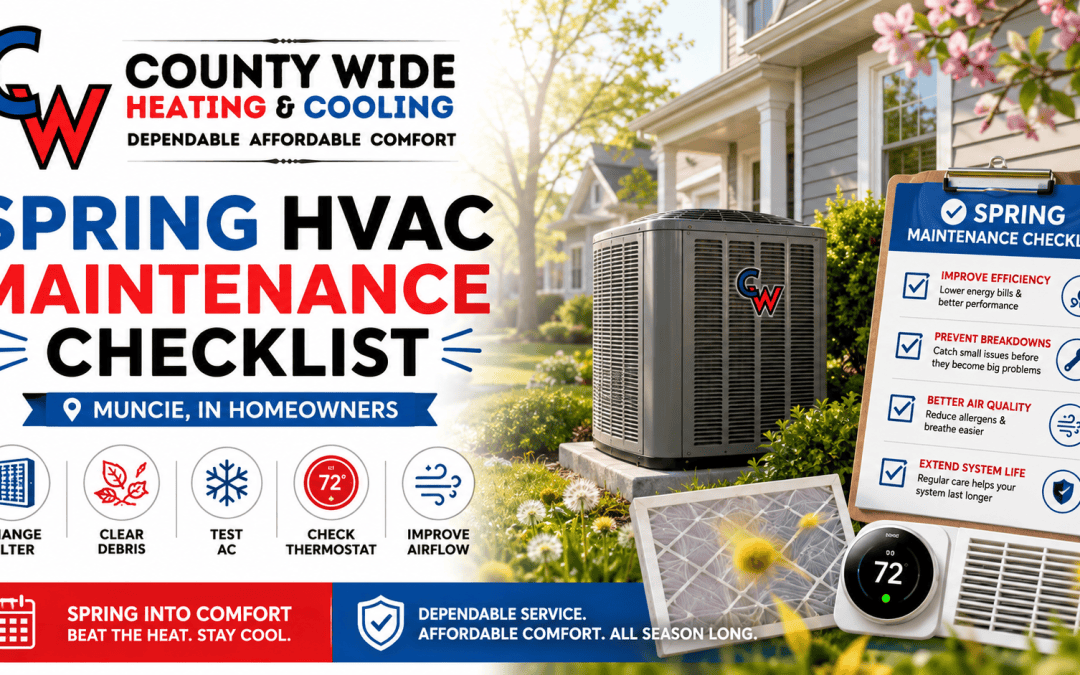
Quick Answer: Spring HVAC maintenance helps Indiana homeowners prepare their air conditioner before summer heat arrives. Homeowners should replace or check the air filter, clear debris around the outdoor AC unit, test the cooling system, check vents and airflow, review thermostat settings, and schedule a professional tune-up if they notice weak airflow, warm air, unusual noises, musty odors, short cycling, or uneven cooling.
Why Spring HVAC Maintenance Matters in Indiana
After a long heating season, your HVAC system may have dust buildup, worn parts, or airflow issues. Spring also brings pollen, humidity, rain, storms, and fast temperature changes across Muncie and East Central Indiana.
Spring maintenance can help your system run more efficiently, cool your home more evenly, improve indoor air quality, reduce the risk of summer breakdowns, and catch small problems early. It is better to find an AC issue on a mild spring day than during the first stretch of 90-degree weather.
Spring HVAC Maintenance Checklist
Here are the most important steps homeowners should take before cooling season.
Replace or Check Your Air Filter
A dirty air filter is one of the most common causes of HVAC problems. When the filter is clogged, your system has to work harder to move air through your home. That can lead to weak airflow, uneven temperatures, higher energy use, and extra wear on your equipment.
Most homeowners should check their filter every 30 to 90 days. Homes with pets, allergies, or heavy dust may need filter changes more often.
Clear Debris Around the Outdoor AC Unit
Indiana spring storms can leave leaves, sticks, grass clippings, and dirt around your outdoor unit. Your AC needs room to release heat and move air properly.
Keep about two feet of clearance around the unit when possible. Trim back shrubs, remove debris, and make sure airflow is not blocked.
Test Your Air Conditioner Before Summer
Do not wait until the first hot day to turn on your AC. On a mild spring day, turn your cooling system on and let it run for a short time.
Pay attention to how it sounds, how the air feels, and whether the system responds correctly to the thermostat. Call for service if you notice warm air, weak airflow, loud noises, burning smells, musty odors, or short cycling.
Check Vents and Airflow
Walk through your home and make sure vents are open and not blocked by furniture, rugs, curtains, or boxes.
If one room feels much warmer or cooler than the others, there may be an airflow issue, duct problem, or system performance concern.
Check Your Thermostat
Your thermostat controls the entire comfort system. In spring, make sure it is set correctly for cooling and replace the batteries if needed.
If your thermostat is not reading the temperature correctly, or your system turns on and off too often, it may need adjustment or replacement.
Common Spring HVAC Problems in East Central Indiana
At County Wide Heating & Cooling, common spring HVAC issues in Muncie and East Central Indiana homes include dirty condenser coils, clogged condensate drains, weak capacitors, restricted airflow, thermostat problems, worn contactors, and low refrigerant concerns.
Many of these issues are easier to address before the first major summer heat wave. A spring tune-up gives a technician a chance to inspect the system, clean key components, test electrical parts, and look for problems that may affect cooling performance.
Dirty Condenser Coils
Your outdoor unit collects dirt, pollen, grass clippings, and debris. When the coils are dirty, your AC may struggle to release heat, which can reduce cooling performance.
Clogged Condensate Drain
Your AC removes moisture from the air. That moisture drains through a condensate line. If the drain gets clogged, it can cause water leaks, musty odors, or system shutoffs.
Weak Capacitor
A capacitor helps start and run key AC components. If it becomes weak, your system may have trouble starting or may stop working during hot weather.
Low Refrigerant
Low refrigerant can cause poor cooling, warm air from vents, frozen coils, or longer run times. Refrigerant concerns should always be checked by a trained HVAC technician.
Worn Contactor
The contactor controls power to your outdoor unit. Over time, it can wear out or fail, which may prevent your AC from turning on properly.
Thermostat Issues
Sometimes the problem is not the AC unit itself. A faulty or poorly placed thermostat can cause short cycling, uneven comfort, or incorrect temperature readings.
Restricted Airflow
Dirty filters, blocked vents, duct issues, or dirty components can all restrict airflow. Poor airflow makes your system work harder and can reduce comfort throughout the home.
Simple HVAC Warning Signs Table
| Warning Sign | Possible HVAC Issue |
|---|---|
| Weak airflow | Dirty filter, blocked vent, or duct issue |
| Warm air from vents | Refrigerant concern, compressor issue, or system problem |
| Frequent cycling | Thermostat issue, electrical issue, or airflow problem |
| Musty odor | Drain issue, moisture concern, or indoor air quality problem |
| High energy bills | Efficiency problem, dirty components, or restricted airflow |
| Loud buzzing or clicking | Electrical component issue |
| Water near indoor unit | Clogged condensate drain |
| Uneven cooling | Airflow issue, duct issue, or system performance problem |
Do Not Ignore Indoor Air Quality
Spring allergies can be rough in Indiana. Pollen, dust, humidity, and airborne particles can move through your HVAC system and affect the air inside your home.
If your family deals with allergies, musty smells, dust buildup, or humidity issues, spring is a good time to ask about indoor air quality options. Better filtration, humidity control, and regular HVAC maintenance can help keep your indoor air cleaner and more comfortable.
Schedule Professional HVAC Maintenance
Homeowners can handle basic steps like filter changes and clearing debris, but a professional HVAC tune-up goes deeper. During a maintenance visit, a technician can inspect electrical components, check system operation, clean key parts, test airflow, inspect the condensate drain, check thermostat performance, and look for worn or failing parts before peak cooling season.
Frequently Asked Questions
Should I turn on my AC before summer?
Yes. Test your air conditioner during spring before hot weather arrives. If the system does not cool properly, makes unusual noises, or blows warm air, schedule service before summer demand increases.
What are signs my AC needs a tune-up?
Common signs include weak airflow, warm air from vents, frequent cycling, loud noises, musty odors, uneven cooling, or higher energy bills. Even if your system seems to be working, a spring tune-up can help improve reliability.
Can spring allergies affect my HVAC system?
Yes. Pollen, dust, and other particles can collect in filters, ducts, and HVAC components. Replacing filters and keeping your system maintained can help support better indoor air quality.
How much clearance does an outdoor AC unit need?
Most outdoor AC units need about two feet of clearance around them for proper airflow. Keep plants, leaves, grass clippings, and debris away from the unit.
How often should HVAC maintenance be performed?
Most homes should have HVAC maintenance twice a year. Spring is best for cooling system maintenance, and fall is best for heating system maintenance.
Schedule Spring HVAC Maintenance with County Wide Heating & Cooling
County Wide Heating & Cooling helps homeowners in Muncie and throughout East Central Indiana prepare their cooling systems for Indiana summer weather. If you want your system checked before the first major heat wave, contact County Wide Heating & Cooling today to schedule your spring HVAC maintenance appointment.