
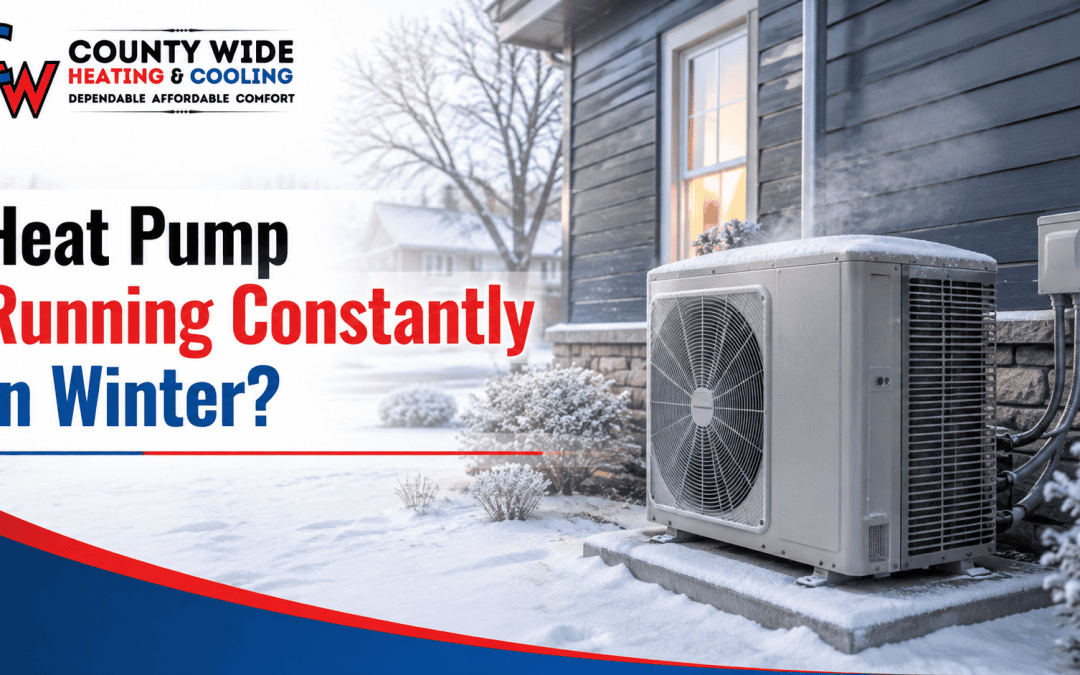
Quick answer: A heat pump running continuously in winter is not necessarily a problem. Long cycles are common when temperatures fall, especially with variable-speed systems designed to operate steadily. Service may be needed if the heat pump cannot maintain the thermostat setting, develops heavy ice, produces unusual sounds or odors, or begins using auxiliary heat more often than usual.
Why Heat Pumps Run Longer in Cold Weather
A heat pump warms your home by transferring heat from the outdoor air rather than producing heat through combustion. Outdoor air still contains usable heat during winter, but the system must work harder to extract it as temperatures fall. During a cold spell in East Central Indiana, a properly operating heat pump may run for much of the day to maintain a comfortable indoor temperature.
Extended operation does not automatically indicate a malfunction. Many modern heat pumps use variable-speed technology that adjusts output instead of repeatedly turning on and off. Running longer at a lower capacity can help maintain steadier temperatures and reduce the temperature swings associated with short cycles.
Run time also depends on the home’s insulation, ductwork, thermostat setting, equipment size, and outdoor conditions. The type of heating system matters as well, since the performance of a heat pump versus a furnace in East Central Indiana can vary as winter temperatures fall. The more important question is whether the system is maintaining comfort without heavy ice, weak airflow, unusual noises, or excessive backup-heat use.
What Defrost and Auxiliary Heat Mean
Frost can form on the outdoor coil while a heat pump operates in cold, damp weather. The system periodically enters defrost mode to melt this buildup. During a defrost cycle, you may notice steam rising from the outdoor unit, a change in operating sound, or temporarily cooler air from the vents.
A light coating of frost that clears during defrost is generally normal. Thick ice that remains on the coil, blocks airflow, or returns soon after defrosting can indicate a drainage, airflow, refrigerant, control, or mechanical problem.
Auxiliary heat usually turns on automatically when the heat pump needs help meeting the thermostat setting. In many systems, this backup comes from electric resistance heating, which typically uses more electricity than normal heat-pump operation. Dual-fuel systems may instead use a furnace as backup.
Emergency heat is different. It is selected manually and bypasses normal heat-pump operation. It should generally be used only when the primary heat-pump system is not working or when a technician or equipment manufacturer recommends it.
Large thermostat increases can trigger auxiliary heat unnecessarily. Gradual adjustments are usually more efficient during winter than lowering the temperature significantly and asking the system to recover quickly.
When Continuous Running Becomes a Concern
Long cycles are usually less concerning when the heat pump maintains the thermostat setting and operates without unusual symptoms. Continuous operation deserves attention when the home remains cold, the system’s behavior changes suddenly, or energy use rises sharply without a clear weather-related reason.
Warning signs include thick ice that does not clear, weak airflow, grinding or buzzing sounds, burning or electrical odors, repeated breaker trips, or auxiliary heat that stays on for long periods. A system that runs constantly but cannot maintain the selected temperature may have restricted airflow, leaking ductwork, a thermostat problem, low refrigerant, a failing component, or equipment that is not properly matched to the home.
Running under those conditions may increase energy use and place unnecessary strain on the system. Turn the equipment off and request prompt service if you notice smoke, sparks, a strong electrical odor, repeated breaker trips, or loud mechanical grinding.
What You Can Check Before Scheduling Service
Confirm that the thermostat is set to heating mode and a reasonable temperature. Check whether the display indicates auxiliary or emergency heat, and make sure emergency heat was not selected accidentally.
Inspect the air filter and replace it if it is dirty. A restricted filter reduces airflow and can make the system run longer while delivering less heat. Make sure supply and return vents are open and clear of furniture, rugs, or curtains.
Look at the outdoor unit from a safe distance and remove loose leaves or snow that may be blocking airflow. Do not chip ice from the coil or pour hot water over the equipment, since either action can damage the unit. You may also check the electrical panel for a tripped breaker, but do not repeatedly reset a breaker that continues to trip.
If the heat pump still cannot maintain the temperature after these basic checks, professional diagnosis may be needed. A technician can determine whether the problem involves airflow, controls, refrigerant, ductwork, or another system component.
Does a Continuously Running Heat Pump Need Replacement?
Continuous operation alone does not mean the heat pump needs to be replaced. Many performance problems can be corrected through maintenance or repair, including dirty components, airflow restrictions, thermostat issues, control problems, refrigerant concerns, and failed parts.
Replacement may be more practical when the system has repeated breakdowns, cannot maintain comfort, requires a major repair, or has become increasingly expensive to operate. The equipment’s condition, installation, repair history, and overall performance matter more than run time alone.
County Wide’s approach is to diagnose the problem, explain the findings clearly, and help customers compare repair, maintenance, and replacement options. Recommendations are based on the condition of the equipment and the needs of the property rather than automatically assuming the system must be replaced.
Frequently Asked Questions
Should a heat pump run all day when it is freezing outside?
A heat pump may run for most or all of the day during very cold weather, especially if it uses variable-speed technology. Continuous operation is less concerning when the system maintains a comfortable temperature and does not develop heavy ice, unusual noises, or other warning signs.
What is the difference between auxiliary heat and emergency heat?
Auxiliary heat turns on automatically when the heat pump needs additional help. Emergency heat is selected manually and bypasses normal heat-pump operation. Emergency heat should not be used simply because the weather is cold.
Should I turn off a heat pump covered in ice?
A thin layer of frost can be normal and should clear during a defrost cycle. Turn the system off and schedule service if thick ice remains, blocks airflow, or returns shortly after defrosting. Do not attempt to break or melt the ice yourself.
Can a dirty air filter make a heat pump run continuously?
Yes. A dirty filter restricts airflow, reduces heating performance, and may cause the system to run longer. Replace or clean the filter according to the equipment and filter manufacturer’s instructions.
Need Heat Pump Service in Muncie?
County Wide Heating & Cooling is a local, family-owned HVAC company serving homes and businesses throughout Muncie and nearby Delaware County communities. The team provides heat-pump repair, installation, replacement, and preventive maintenance for residential and commercial systems.
Schedule HVAC repair in Muncie if your heat pump cannot maintain the temperature, develops heavy ice, relies heavily on auxiliary heat, or begins operating differently than usual.